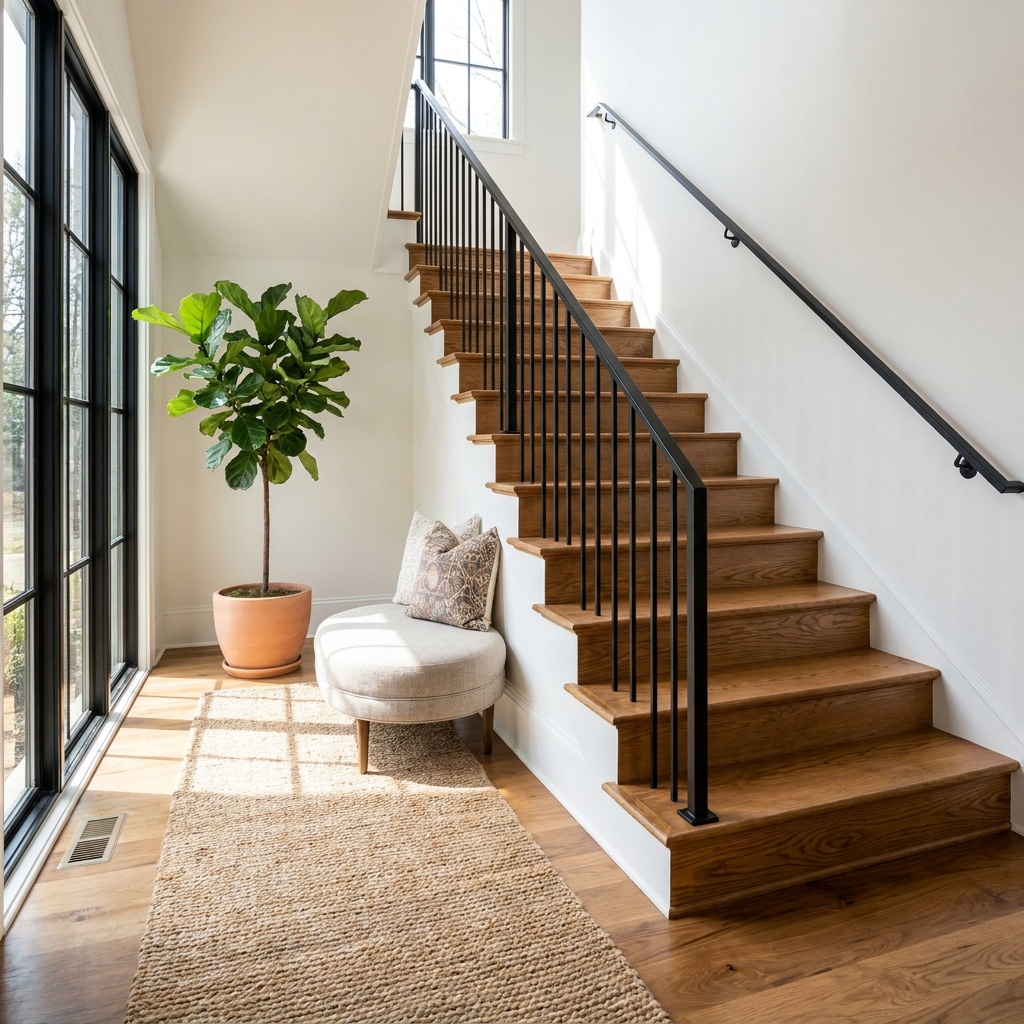
Stairs usually keep squeaking after a remodel because the noise was never a surface problem in the first place. New treads, risers, or a fresh coat of stain can make a staircase look rebuilt, but if the movement between the treads, stringers, and subfloor underneath was never corrected, the same friction and flex that caused the squeak before the remodel is still there. Squeaks come from wood parts rubbing or shifting against each other, and cosmetic work alone doesn’t stop that movement.
The Real Cause Is Almost Always Below the Surface
A staircase is a structural system, not a decorative one. Treads sit on stringers, risers connect treads together, and the whole assembly is fastened to the framing of the house. When any of those connections loosen over time, wood rubs against wood or against old nails, and that friction is what you hear as a squeak. If a remodel only replaces the visible tread and riser material without reattaching or reinforcing what’s underneath, the loose connection is simply covered up with something new-looking.
This is also why a squeak can sometimes get worse after a remodel rather than better. New material added on top of an unstable base can shift slightly as it settles, or it can bridge a gap that flexes every time someone steps on it.
Common Shortcuts That Leave Squeaks Behind
- Re-facing over old framing: Installing new treads and risers directly over the original stringers without checking for loose joints or worn wood.
- Nails instead of structural screws: Nails can hold initially but tend to work loose from repeated foot traffic and seasonal wood movement, which is exactly what starts the squeak cycle again.
- Skipping subfloor and landing checks: A squeak near the top or bottom of a staircase is often coming from the landing framing, not the stairs themselves, and it gets missed if the focus is only on visible steps.
- No shimming or gap correction: Small gaps between a tread and stringer widen over time. If they aren’t shimmed and fastened correctly, the tread rocks slightly with every step.
- Refinishing without repair: A refinishing pass can restore the look of worn wood, but it doesn’t address the mechanical connections underneath unless that structural check is part of the scope.
Why This Matters for Code Compliance, Too
A squeaky stair is often a visible sign of a bigger question: is the structure still sound and up to current safety expectations. Loose treads and stringers are a functional issue, but remodels are also the right time to confirm things like handrail height, tread depth and riser height consistency, and baluster spacing, which typically needs to be tight enough that a 4-inch sphere cannot pass through. A remodel that only replaces surface materials without reviewing these structural and code details can leave both the noise and the underlying safety questions unresolved.
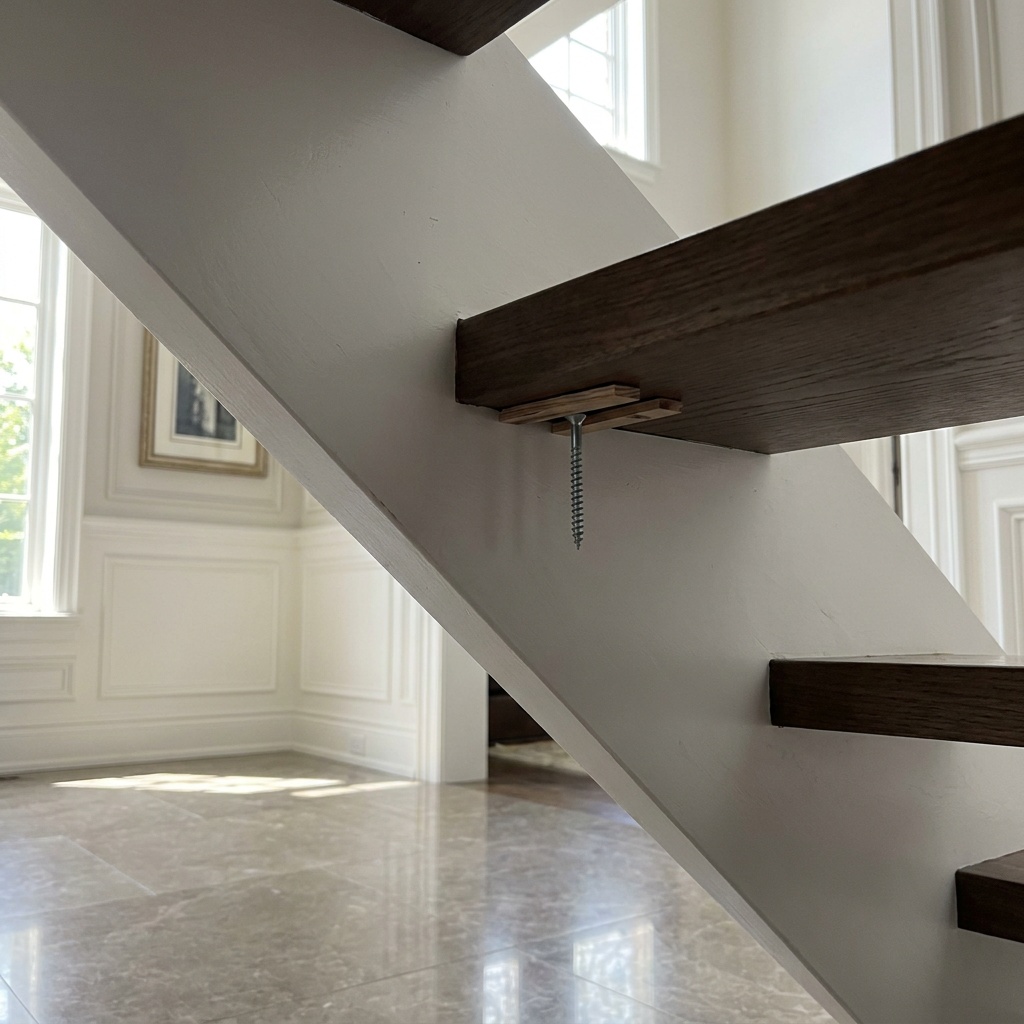
Getting this right usually means opening up the staircase enough to see how the treads, risers, and stringers actually connect, not just what they look like from the top. That’s the difference between a refinishing job focused on wear and color, and a full stair remodeling project that addresses the frame itself.
What a Proper Fix Actually Looks Like
Correcting a squeak for good typically involves a few specific steps rather than a single quick patch:
- Identifying exactly which tread, riser, or joint is moving, since not every squeak comes from the same spot.
- Removing or lifting the affected tread to inspect the stringer connection underneath.
- Filling gaps with construction adhesive or shims where wood has shrunk or shifted.
- Re-securing with structural screws driven at the correct angle into solid framing, rather than face-nailing into material that’s already loose.
- Rechecking the fix under actual foot traffic before finishing surfaces go back on.
This kind of work is harder to see once the staircase is finished, which is exactly the point. A solid staircase shouldn’t announce itself with noise every time someone uses it.
What Drives the Cost of Fixing It
Correcting squeaks that survived a previous remodel can range from a simple tread reattachment to a broader structural review, depending on how much of the original framing needs attention. Scope, the number of affected steps, material choices, and any code-related adjustments (like railing or baluster spacing) all factor into the total cost. Because every staircase and every home’s framing is different, the most accurate way to know what a fix will involve is a walk-through rather than a general estimate. Homeowners across Decatur, Sandy Springs, Roswell, Alpharetta, Marietta, and Buckhead can find their area listed on the service areas page, and the next step from there is requesting a consultation for a fixed-price estimate based on the actual condition of the stairs.
FAQ
Can a squeaky stair be fixed without replacing the treads?
Often, yes. Many squeaks are corrected by accessing the underside of the staircase or carefully lifting a tread to re-secure it, rather than replacing the wood entirely. The right approach depends on how loose the connection has become and whether the wood itself is damaged.
Does refinishing a staircase fix squeaks?
Refinishing addresses surface wear like scratches, dullness, and color, not the structural connections underneath. If squeaking is present, it typically needs to be evaluated and repaired separately from any refinishing work.
Is a squeaky stair actually a safety issue?
Not always, but it can be a sign of loosened connections that are worth checking, especially if the staircase feels like it flexes or shifts underfoot in addition to making noise. A structural review can confirm whether it’s a minor fix or part of a larger issue.
If your stairs still squeak after previous work, or you’re not sure whether a past remodel actually addressed the structure underneath, request a consultation through /contact/ and get a clear, fixed-price plan for fixing it correctly.